



Description
Beethoven: Piano Sonatas No. 4 & No. 8 on Schantz Fortepiano
Sonata No. 4 in E-flat Major, Op. 7 “Grand”
(Allegro molto e con brio | Largo, con gran espressione | Allegro | Rondò. Poco allegretto e grazioso)
Sonata No. 8 in C minor, Op. 13 “Pathétique”
(Grave – Allegro di molto e con brio | Adagio cantabile| Rondò: Allegro)
ONLY DIGITAL VERSION
Buy for downloading
GIANMARIA BONINO
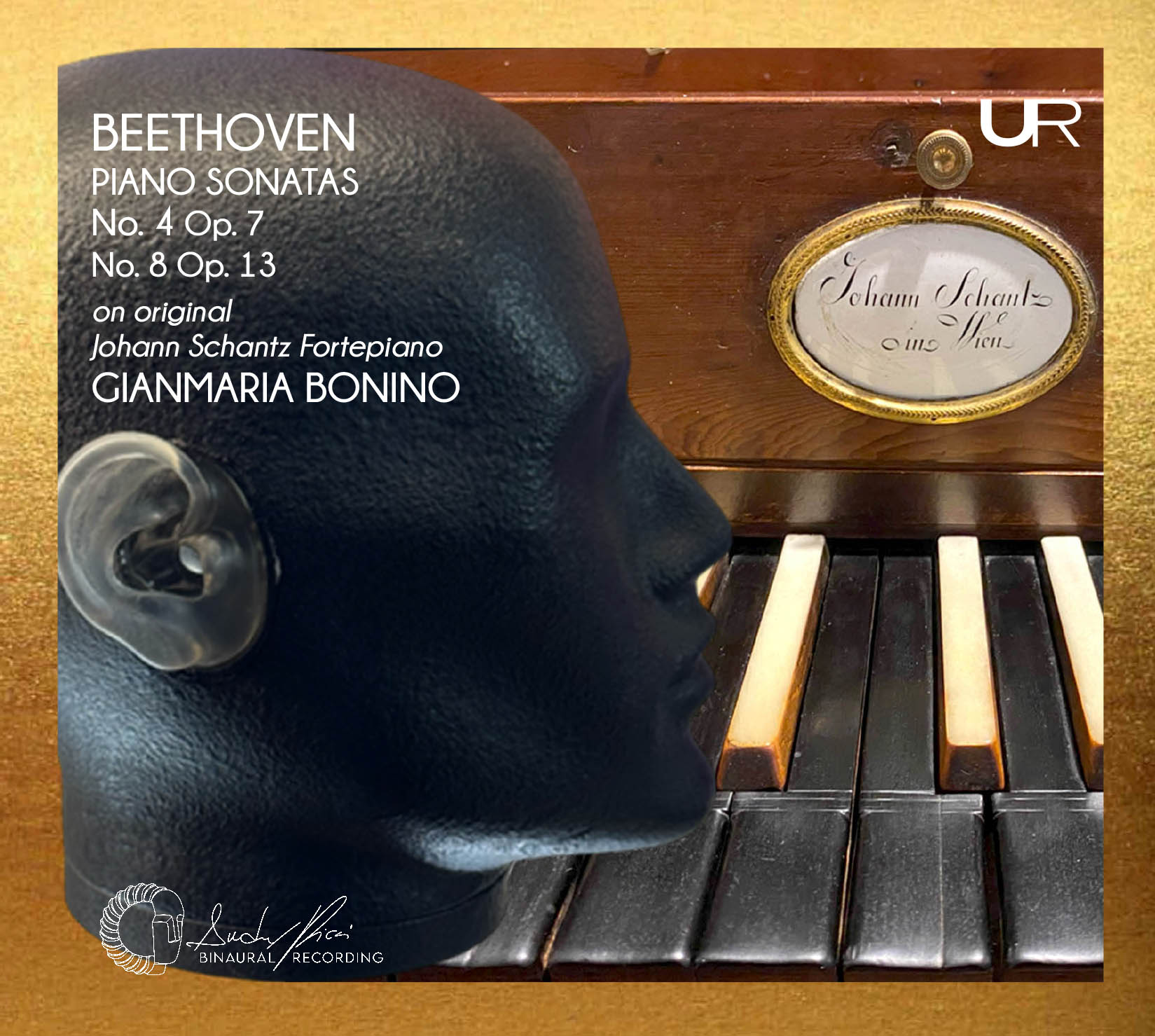
Fortepiano (Grand) built by Johann Schantz, Vienna c.1797 signed on oval plate on the front board: Johann Schantz in Wien case veneered in yew with four square tapered legs.
case dimensions: cm 221x97x25
keyboard compass F1-g3,
F1-bb1 bichord, b1-g3 trichord.
continuous bridge of black stained maple.
Three octave span mm 475.
Natural keys ebony covered, fruitwood sharps covered in ivory.
Viennese action with brass Kapseln.
Stops: two knee levers for raising the dampers (Forte), one had stop on front board for the moderator.
The peculiarity of this recording lies in the instrument: an original Fortepiano by Johann Schantz c. 1796.
Also, the recording technique by Eng. Andrea Ricci (Spirit Turin, leader in headphones) deserve some notes.
This technique consists of using a microphone as a microphone resin head, in which 2 microphones have been inserted ear canals and in verifying correct sound performance by listening to the recording again after a few minutes from the performance of the concert by a committee of critical review using a headphone listening system Specially calibrated Spirit Torino.
With the Spirit Binaural Recording system you will be able to obtain a particularly realistic listening experience both with traditional hi-fi systems and with headphones thanks to the fact that the Binaural Head that we use, manages to map the position and distance of sounds in it the way our brain does it. If you listen to this record closing your eyes, afterwards a few minutes it will be as if you were there with us, on the day of concert.


Reviews
There are no reviews yet.